
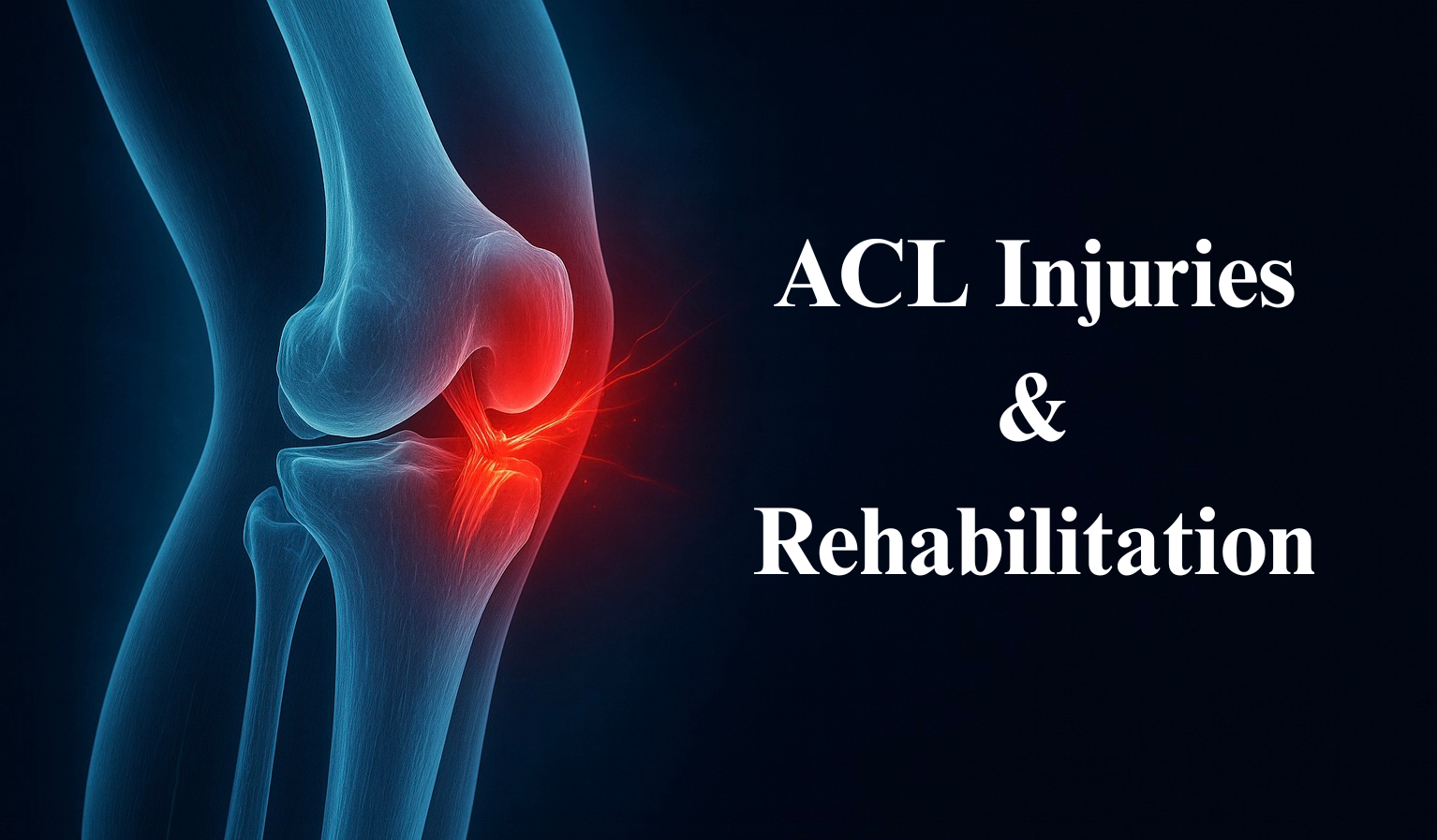
The anterior cruciate ligament (ACL) is a small ligament within the knee that connects the thigh bone (femur) to the shin bone (tibia) and plays a key role in stabilizing the knee joint.
ACL injuries are among the most common knee injuries in athletes and younger individuals, and typically occur while participating in sports or other high-intensity activities. Mechanisms that can contribute to an ACL injury include:
sudden stops or rapid changes in direction
landing awkwardly from a jump
direct contact or a blow to the knee
muscle imbalances or weakness in the legs, hips, or core
At the time of injury, immediate symptoms may include:
a popping sound or sensation at the time of injury
severe pain
rapid and significant swelling within the first few hours
knee instability, limited range of motion, and difficulty bearing weight
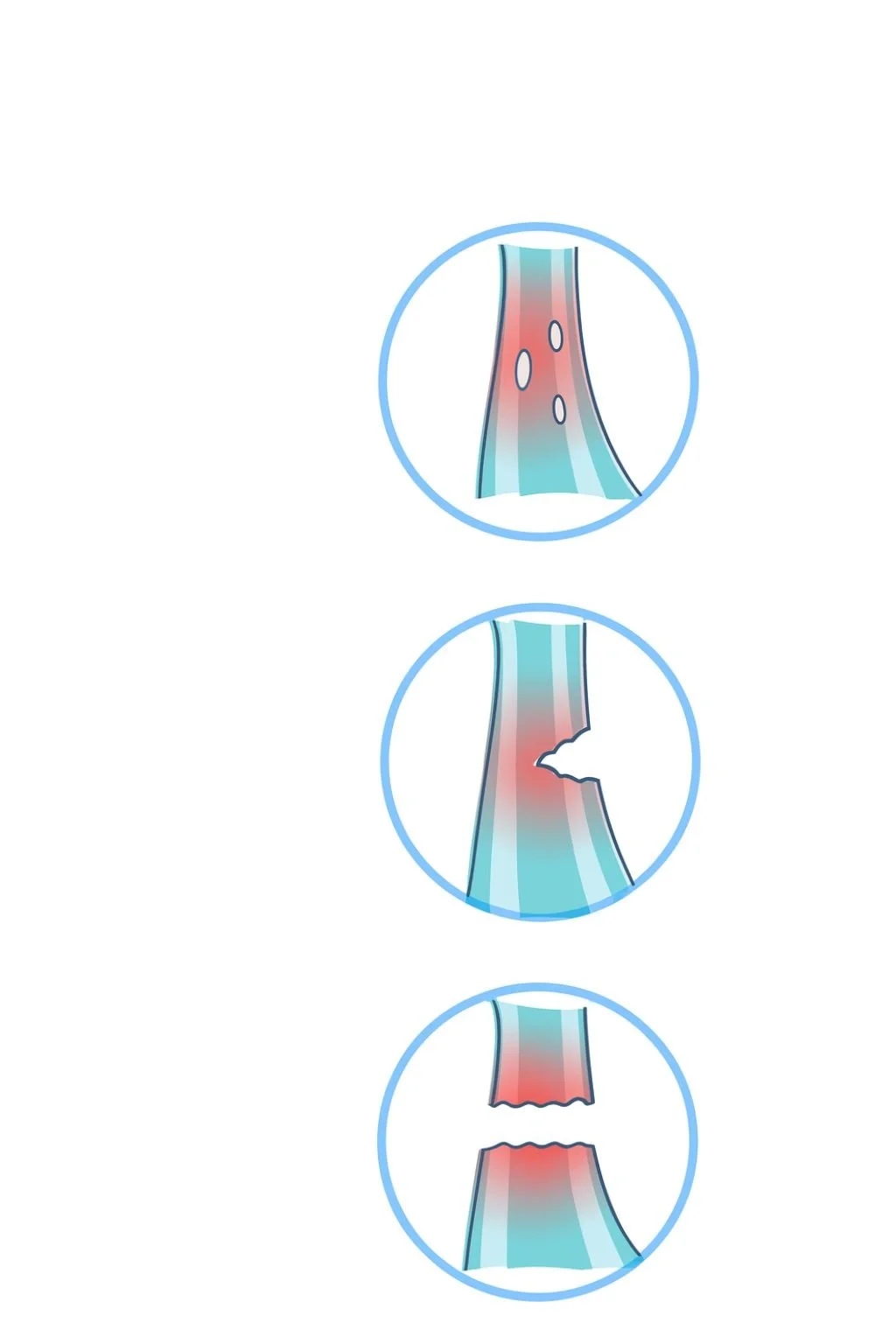
ACL injuries involve a sprain or tear of the ligament and are classified from grades 1-3 based on injury severity.
Grade 1 (Sprain) - The ligament is stretched, causing microscopic damage, but remains intact and continues to provide sufficient stability to the knee joint. Physiotherapy treatment focusses on reducing pain and swelling, restoring range of motion, strengthening the surrounding muscles, and gradually returning to activity. Surgery is usually not required.
Grade 2 (Partial Tear) - The ligament is stretched and partially torn, which may result in knee joint instability. Physiotherapy aims to improve knee stability, strength, and neuromuscular control, and may be used as either stand-alone treatment or in preparation for surgery, if surgery is required.
Grade 3 (Complete Tear) - The ligament is completely torn in half and no longer provides stability to the knee joint. Surgery is typically required, and physiotherapy plays a key role in injury rehabilitation both before and after surgery, helping reduce swelling, restore movement, rebuild strength, and safely progress back to sport or daily activities.
ACL injuries involve a sprain or tear of the ligament and are classified from grades 1-3 based on the severity of the injury.
Grade 1 (Sprain) - The ligament is stretched, causing microscopic damage, but remains intact and continues to provide sufficient stability to the knee joint. Physiotherapy treatments focusses on reducing pain and swelling, restoring range of motion, strengthening the surrounding muscles, and gradually returning to activity. Surgery is usually not required.
Grade 2 (Partial Tear) - The ligament is stretched and partially torn, which may result in knee joint instability. Physiotherapy aims to improve knee stability, strength, and neuromuscular control, and may be used as either a stand-alone treatment or in preparation for surgery, if surgery is required.
Grade 3 (Complete Tear) - The ligament is completely torn in half and no longer provides stability to the knee joint. Surgery is typically required, and physiotherapy plays a key role in injury rehabilitation both before and after surgery, helping reduce swelling, restore movement, rebuild strength, and safely progress back to sport or daily activities.